
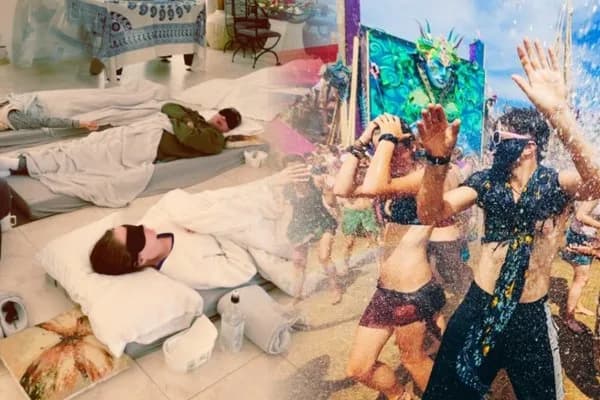
Across retreat centers and festival stages, psychedelics have become central to a growing culture of transformation seeking. Many people who join a plant medicine retreat are often finding paths toward deep emotional liberation that asks more of them than they might initially anticipate.
In one space, the promise is therapeutic breakthrough; in the other, euphoric release. But both rely on the same neurological shift – and both reveal how blurred the line has become between healing and escape.
Psychedelic retreats like to wrap themselves in the language of healing. You hear phrases like “sacred container” and “integration support” tossed around.
The promise is simple but seductive: come here, take this substance, and we’ll help you face the things you’ve been running from. The idea of exploring how conscious cannabis can support your internal perspective might seem appealing at first. Supposedly, it’s a structured descent into the underworld of your psyche – with a nice, soothing itinerary.
But beneath the holistic jargon is a delicate reality – many retreats aren’t equipped with the kind of structured emotional support that deep psychedelic work demands. When someone’s journey takes them into overwhelming psychological territory, it’s not enough to hope for the best. The safety net has to be intentional, not improvised.


As an emotions therapist who facilitates retreats, I am deeply aware of the thin line between offering space for profound experiences and inadvertently opening doors that some participants aren’t ready to walk through alone (pre-retreat intake interviews are essential for determining this). The process requires prioritizing safe and supported psychedelic integration to ensure the nervous system feels truly held throughout the experience.
Psychedelics can be powerful allies in emotional healing, but only when handled with humility and an acute awareness of how fragile the human psyche can be under their influence.
Step into the other side of this culture
And yet, the irony becomes blindingly obvious when you step into the other space of psychedelic culture – the psytrance festival.
Last month, at Boom Festival in Portugal, I watched thousands of people swirling through light tunnels and basslines, “candy flipping” their way through combinations of LSD, MDMA, mushrooms, and whatever else the night had to offer.

Unlike retreats, Boom, and other festivals like it, aren’t pretending to be your therapist. There are no ‘integration circles’ after sunrise sets, no promises of guided emotional breakthroughs.
What you do see, though, are wristbands, lined up on the arms of countless fest-goers, like psychedelic merit badges – each one a visible receipt of their owner’s pilgrimage from one fest to the next. It’s a wearable résumé of altered states, each wrist band quietly boasting another season spent orbiting sobriety like it’s the last place they want to land.

Why every plant medicine retreat is unique
Whether you’re lying on a woven mat at a retreat or losing yourself in a sea of flashing lights and pulsing bass at a festival stage, the same neurological trick is at play.
What actually happens when the brain goes quiet
Psychedelics, as glamorous as we like to make them, are fundamentally expert at one thing: shutting down the Default Mode Network (DMN). The DMN is the part of your brain responsible for that relentless inner monologue – the voice that inventories your anxieties, regrets, and emotional landmines you’ve been tap-dancing around for years.
When psychedelics suppress the DMN, the result can feel like liberation. That chattering critic goes quiet. For some, this is where deep healing begins. For others, it’s simply a welcome numbness. Psychedelics like psilocybin, LSD, and MDMA are known to temporarily down regulate the DMN.
In layman’s terms, they dial down the volume on the part of your brain that keeps reminding you you’re not good enough, or that you should text your ex at 3AM. This neurological quieting is often described in lofty terms like “ego dissolution” or “oneness,” but a more sobering interpretation is this: you’re hitting pause on the narrative loop of self-critique.
And this is where things can get confusing. Because shutting down the DMN can open doors to profound insights, but it can just as easily become a neural snooze button. When the DMN goes offline, people often describe a sense of relief – as if a heavy emotional burden, full of past traumas and unresolved feelings, has suddenly been lifted.

But that lifting isn’t the same as processing. It’s more like placing your emotional burdens on a temporary shelf – out of sight, but not resolved. For some, that relief might last days, weeks, months. But when the effects wear off, everything you set aside is still waiting, untouched, demanding your attention.
At retreats, facilitators hope this DMN quieting leads to real emotional breakthroughs and meaningful personal growth. But without actual therapeutic scaffolding, that is trained professionals who know how to guide people through deeper emotional issues, that temporary sense of peace can be misleading.
It can feel like progress, but it’s often just pushing emotions out of sight without actually dealing with them. It can feel like progress, but it’s often just pushing emotions out of sight without committing to your own intentional healing by staying present.
Festivals, on the other hand, don’t even bother with the pretense. The DMN shutdown is a feature, not a bug. The music, the substances, the lights – it’s an assault on the brain’s ability to maintain a coherent sense of self. For many, that’s the entire point.
The cultural myth is that festivals are about fun, and retreats are about depth. But in practice, that line is paper-thin. Both environments are filled with people trying to put their traumas and emotional aches on pause. The main difference? One is framed as a healing journey, the other as a celebration.
But for many, the emotional math is the same: keep moving, keep dosing, keep the DMN off – and maybe, just maybe, the hard stuff won’t catch up. I’ve seen that same festival-style escapism creep into the retreat world too, where people start stacking ceremonies and jumping from one retreat to the next, quietly hoping that if they just do enough of them, they’ll transform without ever having to slow down and face what they’re actually running from.
The thin membrane between Emotional Liberation and Numbing
So where’s the line between spiritual awakening and psychedelic avoidance? Between liberation and numbing? It’s not a line. It’s a membrane. And it’s a lot thinner than we’d like to believe. But of course, nobody wants to hear that while they’re dancing!
Some people are finding a moment to consciously reset during these intense experiences, while others use them to hide. This neurological quieting often leads to ego dissolution, but carefully processing every nuanced internal shift is where real change happens.
If you’ve navigated this line yourself, whether as a facilitator, a festival-goer, or as someone who’s explored these spaces, I’d be curious to hear your perspective. How do you see the balance between healing and escape playing out in this culture? Feel free to share your thoughts in the comments below; these are conversations worth having.
With Love,
Becca
P.S. If you’re curious about how this work can be held with care and intentionality, I facilitate small-group medicine retreats designed to offer deep emotional support without the pretense. If that’s of interest to you and you’d like to know when the next retreats are forming, I invite you to register your interest here.
Join the conversation
This piece is part of an ongoing conversation over on Facebook, where our community gathers. Add your voice there — or, if you’d rather share something just with Becca, send a private note.
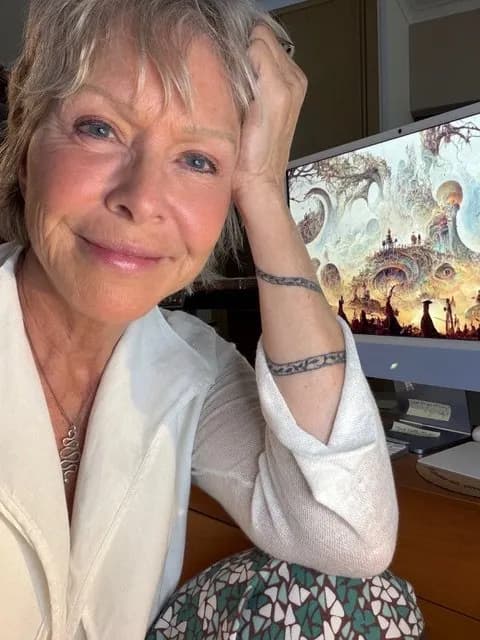
Becca Williams
Emotions Therapist & Registered Dietitian
An Emotions Therapist, Registered Dietitian/Nutritionist, educator, group facilitator, and longtime plant medicine advocate.
More about Becca