
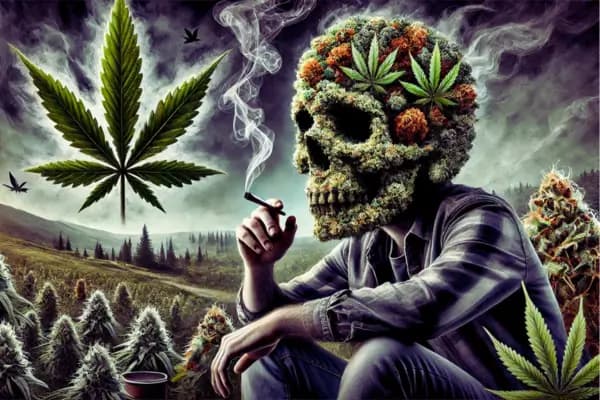
I was flabbergasted – it was almost beyond belief. Using cannabis for healing is something I’ve dedicated over a decade of my clinical practice to, so when the narrative gets twisted, it hits close to home.
Last week, the New York Times recited a litany of horror stories about cannabis causing severe health issues.
The article, As America’s Marijuana Use Grows, So Do the Harms (I’ve gifted the link so you can read it, in case you missed it) presented accounts from doctors, researchers, health officials and, most importantly, the people who take cannabis as a medicine for countless health issues, including anxiety and depression, migraines, relief from painful symptoms of cancer and AIDS (all mentioned in the NYT story).
The reason this take-down piece came as such a shock is that I’ve always revered cannabis as a potent plant medicine with the ability to support people on their healing journeys. Personally, my journey with cannabis started all those many decades ago in college. I was looking for relief from crippling anxiety and discovered that cannabis helped.

When Cannabis Triggers Anxiety Instead
Of course, as a clinician, I’ve always been aware that – as with any agent for good – cannabis can also be problematic when overused or habitually used. But the overwhelming scale of the issue brought out in the NYT is startling.
I even asked my colleague and friend, Lex Pelger, a scientist who reviews and reports on cannabinoid science through his popular Substack blog, “Cannabinoids & the People”. I wanted his opinion on the article suspecting it might be a “hit piece” since the NYT has historically not been favorable towards the plant.
But Lex said, “Most people aren’t going to like my answer… It [the NYT article] seems fine to me. That’s about where the data lines up and these anecdotes match to what I’ve heard.”
That does not make the stories any less sobering, especially for people living with severe depression.
This Isn’t the Canna We Used to Know With THC So High and CBD So Low
The surge in severe health issues (such as anxiety, depression and psychosis) is frequently blamed on the escalating potency of the plant, which commercial growers have been steadily increasing to produce quicker, more intense highs. By comparison, according to the Times piece, what we used to smoke in the 1990s typically contained about 5% THC. Today’s products, like concentrates, can contain an astonishingly high THC content, reaching up to a staggering 90%, with flower as high as 30% (some cultivators claim it’s even higher).
This is why I personally refer to these products as “crack cannabis” and warn people to avoid it like, well, crack.
Using Cannabis for Healing Is About the Ratio
Often people I consult with about my emotional release work say they avoid using cannabis for medication or therapeutic purposes because it triggers overwhelming anxiety for them.* I believe it’s often (not always) because the THC content is too high.
That is why I teach people about conscious cannabis and careful dosing. It is not about getting as high as possible. It is about finding an amount that supports the work without overwhelming the person doing it.
The judicious use of this plant medicine has been a potent addition to my emotional and trauma release method for more than 10 years. It supports the deep inner exploration of buried emotions, processing and releasing them. I always suggest a ratio of at least twice as much CBD as THC. Many of my students, clients, and participants often go with even more expansive ratios… up to 20 times more CBD than THC. The CBD relaxes the fight or flight response while that little bit of THC amplifies the emotion(s) they want to work with.
The CBD relaxes the fight or flight response while that little bit of THC amplifies the emotion(s) they want to work with. For me, using cannabis for healing means creating enough safety to meet what is there, not blasting ourselves into some experience we can’t handle.
You can read more about it here.
The Healing Is in the Care We Take
Despite its massive critique, the NYT reporters did weave in a few acknowledgements of the plant’s benefits:
- Tens of millions of Americans use the drug, for medical or recreational purposes; most of them without problems.
- In interviews, they [doctors and researchers] acknowledged that marijuana can offer substantial health benefits for certain patients.
- While the drug can assist the endocannabinoid system, alleviate some symptoms of disease and otherwise make people feel good, regular heavy doses of it can also throw the system off balance.
To me, the intention is finding room for real healing, not escaping from ourselves or adding one more thing that leaves us feeling worse.
Using cannabis for healing can be a beautiful and potent tool. But like all powerful things, it asks us to pay attention to what we’re doing, how much we’re using, and why.
What are your thoughts on this? Have you experienced the difference between the cannabis of back then and the cannabis of today? Drop down to the comments section and let me know!
With Love,
Becca
*when people work with me, if they wish to use an alternative plant medicine, we go with microdosing psilocybin.
Join the conversation
This piece is part of an ongoing conversation over on Facebook, where our community gathers. Add your voice there — or, if you’d rather share something just with Becca, send a private note.
Becca Williams
Emotions Therapist & Registered Dietitian
An Emotions Therapist, Registered Dietitian/Nutritionist, educator, group facilitator, and longtime plant medicine advocate.
More about Becca