

In the world of psychedelic healing, excuse me, that is… in the world of “medicine,” we often imagine that those who serve medicine have walked through fire, burned away the ego, and emerged from the experience as grounded, wise guides.
True guidance requires quietly resolving past emotional wounds before attempting to navigate anyone else through vulnerable territory. I know this world personally: my own path has shown me both the transformative power of the work and the weight of responsibility it carries.
When Facilitators Forget Their Own Medicine
With that role comes an unspoken social contract: the facilitators have done the work. They are expected to embody living out authentic personal recovery, rather than unraveling their own issues in the middle of the space they are meant to hold for others.
And because they step into this role in life as guides, mentors, and sometimes even models for their communities, the expectation doesn’t end when the ceremony or retreat closes. It extends into how they show up in everyday agreements, relationships, and responsibilities.
And yet, here we are. Again.
Why Psychedelic Healing Requires Everyday Integrity
Let’s talk about a pattern I’ll refer to as the “Sage Daddy Syndrome,” a condition where a self-proclaimed “medicine man” gets high on his own supply while chasing an ungrounded mystical revelation, quickly forgetting basic human decency, communication, and integrity.
A friend of mine, a real medicine woman, recently found herself blindsided by a Sage Daddy situation. She had entered into a business contract with this “medicine man” – using his land and retreat spaces to host her work, relying on both their written agreement and his word to move things forward, being ready this month. She had committed months of preparation, prioritizing supportive trauma informed therapeutic containers for her community, only to suddenly receive abrupt notice that everything would be put “on hold” until February/March 2026 due to a “materials delay.
She was flabbergasted. This wasn’t just an inconvenience, it was a disruption to her livelihood, her ability to hold medicine retreats, and a clear break in the trust that had been foundational to their agreement.
When she reached out for a discussion to understand the situation, the silence was deafening. Worse than the curt cancellation, was the cold shoulder that followed: avoidance, clipped emails, succumbing to silent defensive reactivity, and ultimately blocking her on social media. Just the kind of disappearing act that happens when a person is steeped in spiritual rhetoric but stuck in arrested development.
His inability to face the situation showed that whatever inner growth he presented to the world had not yet matured into real-world responsibility, a sharp contrast to the grounded individual he portrays himself to be. Without steady post ceremony integration routines, profound visionary moments rarely translate into everyday emotional character.
By contrast, my friend responded with the steadiness that comes from years of doing her own inner work. When she shared her perspective with me, it struck me as both mature and deeply earned: “Sometimes the absence of communication,” she remarked on his ghosting, “is itself a form of clarity.” Her response showed a capacity for releasing resentment without lingering bitterness, finding peace despite such unprofessional behavior.
What’s most striking to me is that I haven’t seen this behavior come from medicine women. In my experience, and in conversations with others, the pattern is consistent: women who serve medicine tend to show up with emotional resilience, self-regulation, and a deep sense of accountability. They continue to uphold the work of integrity and presence, even when others fail to meet them there. It’s not that women are flawless, but the lapses I’ve witnessed in this field seem to cluster more often around men who step into the role of “medicine man.”
But to be clear, this isn’t an argument against men – it’s about patterns observed. There are plenty of beautiful, grounded, emotionally mature men doing truly sacred work in the ‘medicine’ healing space. I know them. I’ve worked with them and experienced their presence. They earn trust not through performance, but by showing up with integrity when it matters most.
Still, the majority of bad apples in the psychedelic arena do seem to roll out of the “medicine man” barrel. The issues aren’t small: we’ve seen sexual misconduct, broken agreements, financial exploitation, emotional manipulation, spiritual entitlement, and avoidance of accountability, all too often cloaked in the language and optics of healing. Space holders who avoid identifying deep subconscious fear patterns end up projecting their personal shadows onto the people they serve.
What to Look for Before Stepping into Ceremony
So what can you do? The most important step, if you’re planning on entrusting someone with your healing, is to carefully vet your space holders. Take time to look beyond appearances and words. Don’t be swayed by polished optics or lofty spiritual language. Ask direct questions, and pay attention to how they respond in both words and actions.
Here are some ways to approach that:
- Ask about their training and/or lineage. Who have they learned from, and how do they remain accountable to that tradition or community?
- Notice how they handle feedback. Do they invite dialogue, or do they shut down when challenged?
- Talk to others who have worked with them. First-hand stories (reviews) often reveal what a polished biography cannot.
- Pay attention to power dynamics. Do they foster a sense of shared humanity, or do they center themselves as the authority?
- If possible, observe how they live outside the work. Integrity shows up not only in ceremony but also in everyday relationships, commitments, and responsibilities.
From where I stand in this work, Sage Daddy Syndrome will continue to surface. But your best protection is already within reach: trust your instincts, honor your boundaries, and remember that not everyone who serves medicine is ready to guide others. Discernment is part of the work too, supporting us while fostering gentle holistic wellness practices that raise the standard for this entire field.
These are my observations. What about you? How have you navigated trust and accountability in the psychedelic or healing world? I invite you to share your reflections in the comments, because this conversation is bigger than any one story, and it’s one we need to keep having together.
With Love,
Becca
Join the conversation
This piece is part of an ongoing conversation over on Facebook, where our community gathers. Add your voice there — or, if you’d rather share something just with Becca, send a private note.
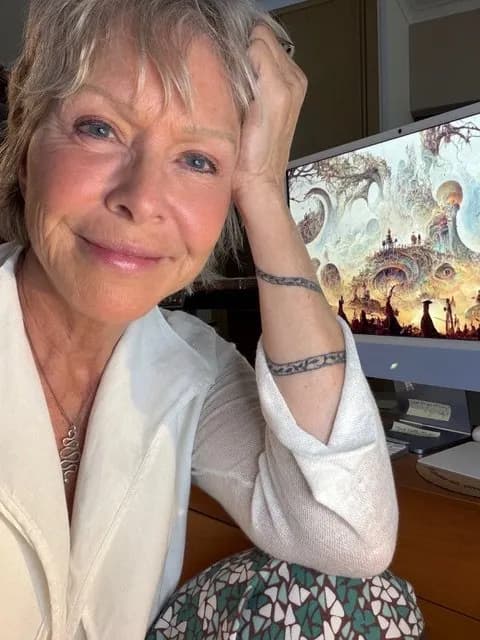
Becca Williams
Emotions Therapist & Registered Dietitian
An Emotions Therapist, Registered Dietitian/Nutritionist, educator, group facilitator, and longtime plant medicine advocate.
More about Becca